
Table of Contents
- How to Spot Fake Clothing Websites Before You Buy
- Secure Payment Methods for Online Shopping
- Check SSL, Trust Seals, and URL Verification
- Verify Contact Details, Return Policy, and Third-Party Reviews
- How Long Does Custom Shirt Shipping Take?
- Social Media Ad Verification and Digital Footprint
- Frequently Asked Questions
Last Updated: September 16, 2026
How to Spot Fake Clothing Websites Before You Buy
Online fashion revenue is projected to reach $219 billion by 2029, according to Channable's e-commerce growth analysis, and scammers know exactly where that money is flowing. Knowing how to identify secure online clothing stores has become a basic survival skill, not a paranoid habit. At Grave Humor, we run a print-on-demand shop on the same internet scammers exploit daily.
Here's the short version: a secure online clothing store shows verifiable contact details, encrypted checkout, transparent return policies, and a real digital footprint. A fake one hides all four. Below, we break down the exact verification steps, including a few that most guides skip entirely.
Red Flags That Expose a Fake Store
Fake stores follow a predictable playbook. Look for prices that sit far below every competitor, a domain registered weeks ago, generic product photos lifted from other sites, and a checkout that only accepts wire transfers or gift cards. Broken grammar across the entire site is another signal, though plenty of legitimate small shops have a typo or two, so weigh it alongside the other evidence.
The Federal Trade Commission's online shopping guidance recommends noting specific product details like manufacturer, model number, and shipping fee structure before buying, because scammers rarely bother matching those details consistently across a site.
Reverse Image Search and WHOIS Lookup
Two verification moves separate careful shoppers from everyone else. First, run the product photo through a reverse image search: if the same image appears on a dozen unrelated stores, it was stolen. Second, check the domain's registration date through a WHOIS lookup. A clothing store claiming "since 2015" on a domain registered three months ago is lying, and that single check takes under a minute.
Secure Payment Methods for Online Shopping
Payment method is the single biggest lever you control, because it determines what happens after a store turns out to be fake. The goal is simple: never let a merchant touch your real account number, and always pay with an instrument that has a dispute process behind it.
Credit cards remain the strongest default. Under the Fair Credit Billing Act, your liability for unauthorized charges is capped at $50, and most major issuers waive even that. More importantly, the card network gives you a formal chargeback process when goods never arrive or arrive materially different from what was advertised. Debit cards fall under the Electronic Fund Transfer Act, which has a different and generally tighter dispute window, and the money leaves your checking account immediately, so a fraudulent charge can bounce rent before it is reversed. Peer-to-peer transfers, wire transfers, and gift cards have essentially no dispute mechanism, which is exactly why scam checkout pages steer you toward them.
PayPal and similar processors insert themselves as the merchant of record, so your bank details never reach the store. Buyer protection applies to eligible purchases, but read the exclusions: custom or made-to-order items are frequently carved out, which matters for print-on-demand apparel.
How to Use Virtual Cards for Extra Protection
A virtual card is a temporary card number issued against your real credit or debit account. You set a spending cap, an expiration window, and sometimes a single-merchant lock, and the number becomes useless after the purchase clears or the window closes. Most major card issuers offer them free inside their banking apps or online portals, and several standalone services issue them as well.
The practical workflow for a clothing store you have never used:
- Generate a virtual number and set the cap to the exact order total, including shipping and tax.
- Set the expiration to 24 to 48 hours so the number dies if the store tries a second charge later.
- If the issuer supports it, lock the number to that one merchant.
- Save the confirmation email; you will need the last four digits if you file a dispute.
This matters because the most common post-purchase fraud pattern is not a stolen card number, it is a recurring charge or a second unauthorized charge weeks after a legitimate-looking order. A capped, expiring virtual number makes that attempt fail at the network level rather than relying on you to notice it on a statement.
| Payment Method | Fraud Protection | Best For |
|---|---|---|
| Credit card | Strong, chargeback rights under the Fair Credit Billing Act | Most purchases |
| Virtual card | Strong, capped and expiring exposure | First-time or unfamiliar stores |
| PayPal | Good, buyer protection with exclusions | Unknown merchants |
| Debit card | Limited, tighter dispute window | Everyday trusted stores |
| Wire transfer / gift card | None | Never for retail |
One more habit worth building: use a dedicated email address for new-store purchases. If the store sells your data or gets breached, the spam lands in a throwaway inbox instead of your primary one, and you get an early warning that the merchant is not trustworthy.
Check SSL, Trust Seals, and URL Verification
A secure online clothing store encrypts every page where you enter personal information, which you can confirm by checking that the URL begins with https:// and displays a padlock icon. Click the padlock to view the certificate details and confirm the domain matches the store you think you're visiting.
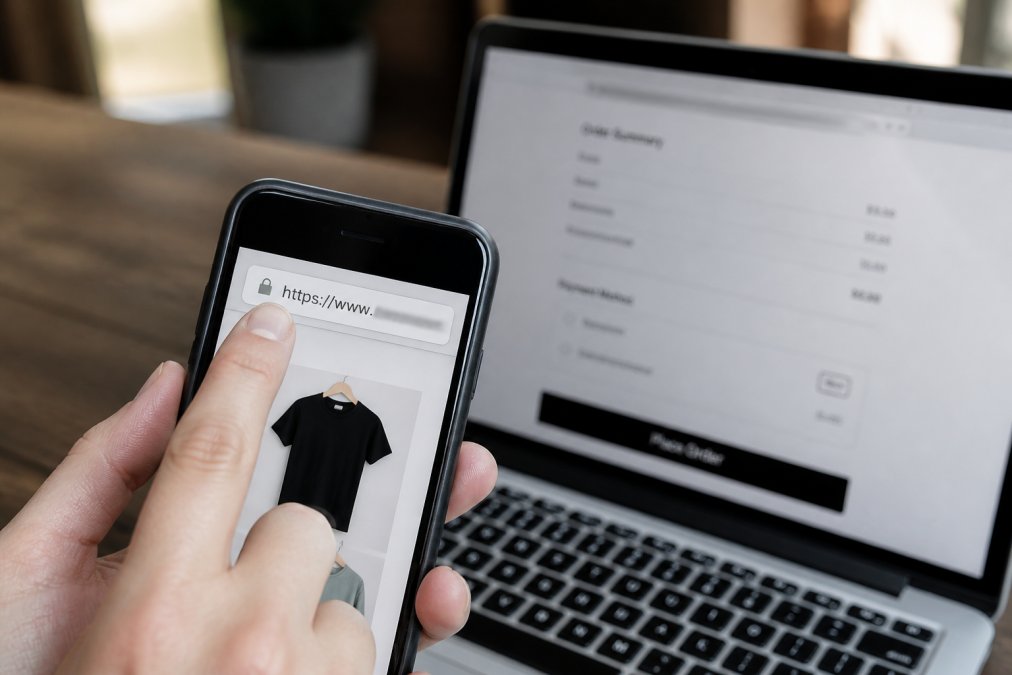
Trust seals from independent verification services add another layer, but verify them by clicking through to the issuer's site rather than trusting the badge image. The research is clear on why this matters: MDPI's 2023 study on clothing e-store image found that perceived security of personal information significantly shapes consumer attitudes and purchase intentions.
Verify Contact Details, Return Policy, and Third-Party Reviews
A legitimate store is easy to reach and easy to leave. Those two properties are hard to fake, which makes them the most reliable verification signals on the page.
Read the Return Policy Like a Contract
The return policy is where fake stores get vague on purpose. A real policy states four things explicitly: the return window in days, who pays return shipping, which items are excluded (custom prints, intimates, and final-sale items are common exclusions even at legitimate shops), and how refunds are issued and how long they take.
Red-flag language to watch for:
- "Contact us for return details" with no stated window or process.
- A return window under 14 days on made-to-order apparel, which is often too short to receive, inspect, and ship back.
- Restocking fees disclosed only at checkout rather than in the policy.
- A policy that requires you to ship returns to an address in a different country than the store claims to operate from.
- No mention of refunds at all, only exchanges or store credit.
Go Off-Site for Reviews
Reviews hosted on the store's own pages are marketing, not evidence. Scammers fabricate testimonials, and even legitimate stores curate which reviews appear. The useful signal lives off-site.
How Long Does Custom Shirt Shipping Take?
Custom shirt shipping typically takes 2 to 7 business days for production plus 3 to 5 days in transit for domestic orders, though timelines vary by printer and season. Print-on-demand shops make each item after you order, so production time is real and worth confirming before you buy a gift with a deadline.
Social Media Ad Verification and Digital Footprint
Scam stores buy social media ads aggressively because the platforms reward engagement, not legitimacy. Before buying from an ad, check the account's history: real brands post consistently over months and years, respond to comments, and show tagged customer photos. A page created last month with 40,000 followers and zero comments is a red flag.
Frequently Asked Questions
How can you tell if an online shopping website is secure?
Look for HTTPS and a padlock icon in the address bar, which indicates encryption. Check for trust seals from recognized providers and read the return policy. Use secure payment methods like credit cards or virtual cards. Verify contact details and a physical address. Also, read third-party reviews and ensure the site has a privacy policy. As the Global Cyber Alliance notes, visual cues alone are not foolproof, so combine multiple checks before buying.
What are the red flags of a fake clothing website?
Red flags include prices that are unrealistically low, poor spelling and grammar, missing contact information, no return policy, and stock photos that appear on multiple sites. A domain registered recently or a site with no social media presence can also signal a scam. The FTC advises noting specific product details like manufacturer and model number to verify legitimacy. If a deal seems too good to be true, it probably is.
Is it safe to shop at independent graphic apparel stores?
Yes, many independent stores are legitimate and secure. Check for SSL encryption, a clear return policy, and real customer reviews on third-party sites. Look for a physical address and contact details. Grave Humor, for example, is a veteran-owned store that uses secure checkout and provides transparent shipping information. Always use a credit card or virtual card for added protection.
How long does custom shirt shipping take?
Custom shirt shipping times vary by store. Print-on-demand shops typically take 2-7 business days to produce your order, then shipping adds 3-5 business days for domestic delivery. Some stores provide tracking and faster options. Check the store's shipping policy before ordering, especially for gifts. Grave Humor prints to order in the USA, but always confirm current timelines on their website.