
Table of Contents
- Why Graphic Tees Are Expensive: The Real Cost Breakdown
- Screen Printing vs. Direct-to-Garment Cost: Which Method Costs More
- How to Identify High-Quality T-Shirts Worth the Price
- The Hidden Costs Behind Premium Graphic Apparel
- How to Care for Graphic Tees to Protect Your Investment
- What You're Actually Paying For: A $50 Shirt Breakdown
- Independent Brands vs. Mass Production: Why the Price Gap Exists
- Frequently Asked Questions
Last Updated: September 3, 2026
Why Graphic Tees Are Expensive: The Real Cost Breakdown
The custom t-shirt printing market in the United States was valued at $857.5 million in 2023 and is projected to grow at a compound annual growth rate of 11.8% from 2024 to 2030, according to Grand View Research's custom t-shirt printing market analysis. Yet many consumers remain baffled by why graphic tees cost what they do. The answer isn't simple greed, it's a complex web of material costs, production methods, design licensing, and supply chain realities that most shoppers never see.
At Grave Humor, we've spent years sourcing and producing high-quality graphic apparel. Understanding why graphic tees are expensive changes how you evaluate them. A $50 shirt isn't overpriced because of arbitrary markup; it's expensive because of the cotton, printing technique, artist compensation, labor, and logistics. When you break down the actual cost structure, most premium graphic tees are reasonably priced for what they deliver.
The real problem is that fast-fashion retailers have conditioned consumers to expect $15 graphic tees, which are possible only through aggressive cost-cutting on materials, labor, and durability. Those shirts fall apart after a few washes. Premium graphic tees are built to last, which justifies their higher price tag.
Screen Printing vs. Direct-to-Garment Cost: Which Method Costs More
Screen printing accounts for 54.4% of the custom printing market by printing technique in 2024, largely due to its cost efficiency for large production runs and exceptional color durability (grandviewresearch.com). Screen printing requires upfront setup costs, creating screens, mixing inks, and preparing the press, which are spread across the entire print run. A 100-unit order might cost $18 per shirt, but a 500-unit order drops to $12 per shirt.
Direct-to-garment printing has minimal setup costs. The printer treats each shirt individually, so per-unit costs typically range from $16 to $24, depending on design complexity and fabric quality. This makes DTG ideal for small batches and print-on-demand models like Grave Humor's approach.
Screen printing produces sharper, more durable prints that withstand hundreds of washes. DTG prints can fade faster, especially with dark inks on light fabrics. But DTG allows independent brands to operate without massive upfront capital, which is why it's growing at a significant rate annually despite higher per-unit costs.
For consumers, understanding your source matters. Brands using screen printing likely have the volume to justify lower prices. Smaller brands using DTG are paying for the ability to produce niche designs without waste.
How to Identify High-Quality T-Shirts Worth the Price
Most people evaluate a graphic tee by looking at the design first. That's backward. A beautiful print on a cheap, thin shirt will disappoint you within weeks.
Start with the fabric itself. Quality graphic tees typically use 100% cotton or cotton-blend that weighs 6.0 ounces or heavier. Does it feel substantial, or flimsy? Thin shirts will pill, shrink unpredictably, and lose their shape.
Next, examine the print quality. Hold the shirt up to light and look at the design edges. Are they crisp and well-defined, or blurry? Quality printing creates sharp edges. The ink should feel bonded to the fabric, not sitting on top of it.
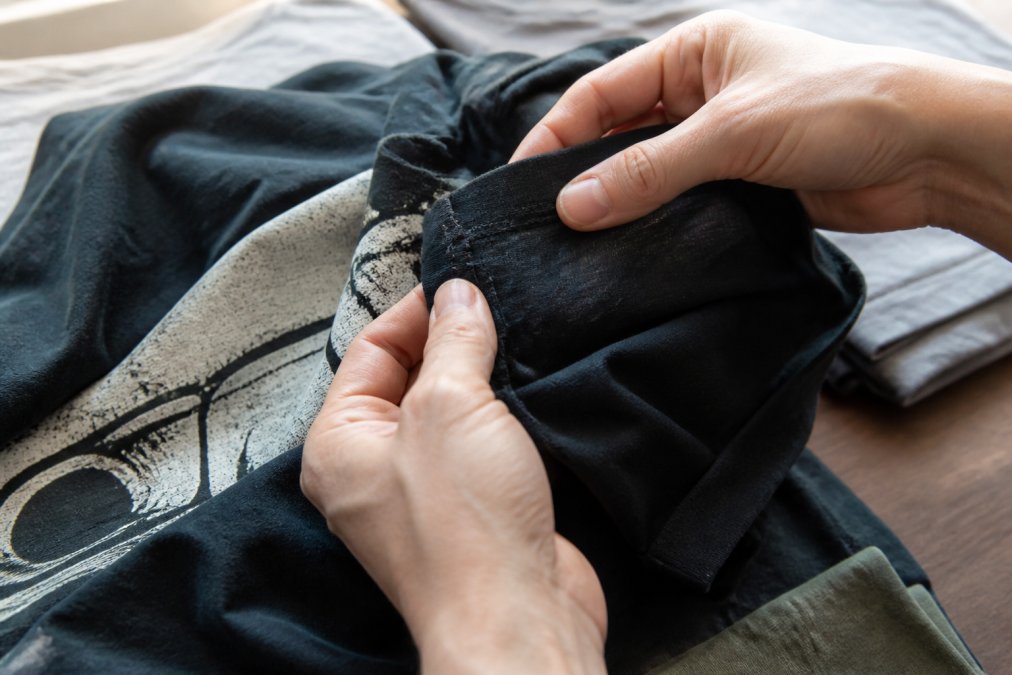
Check the seams. Pull the shirt inside-out and look at the stitching along the shoulders, sides, and armholes. Quality seams are straight, tight, and use reinforced thread. The collar should be reinforced, not just a single layer of fabric.
When evaluating price, compare cost-per-wear, not sticker price. A $50 shirt worn 100 times costs $0.50 per wear. A $20 shirt worn 10 times before it falls apart costs $2.00 per wear. Premium graphic tees often represent better value than cheap alternatives.
The Hidden Costs Behind Premium Graphic Apparel
The sticker price on a graphic tee reflects only a fraction of what actually goes into producing it.
Raw materials are the foundation. Cotton prices have risen significantly, with cotton futures reaching a three-month high in August 2026 due to supply concerns. Fabric accounts for 35-50% of the final production cost. Organic or certified cotton costs more than conventional cotton but reduces environmental impact.
Labor costs are substantial, especially for domestic production. Manufacturing overhead, including factory rent, equipment maintenance, worker salaries, and benefits, adds significant expense. Small-batch domestic production runs higher per-unit costs because these fixed costs aren't spread across massive volumes.
Shipping and logistics have exploded in cost. Container spot freight rates experienced a surge in July 2026, elevating global benchmarks to levels not seen since the 2022 pandemic-era peak. These costs are either absorbed by the brand or passed to consumers.
Design and licensing fees are often invisible but real. If a graphic tee features original artwork, the artist typically receives a royalty of 5-15% of the wholesale price. Licensed designs cost even more.
Quality control and testing add cost as well. Brands that test prints for durability, color fastness, and shrinkage before shipping reduce returns and complaints.
How to Care for Graphic Tees to Protect Your Investment
If you're paying premium prices for quality graphic tees, protecting them is essential.
Wash inside-out in cold water. This protects the print from direct friction and reduces fading. Use a gentle cycle or hand wash if possible. Use mild detergent and skip bleach entirely, which degrades both fabric and ink.
Air-dry whenever possible. Machine dryers generate heat that weakens fabric fibers and causes shrinkage. Hang your shirt in a shaded area; direct sunlight can fade prints.
Fold rather than hang for storage. Heavy hangers can stretch the shoulders over time. Store in a cool, dry place away from direct sunlight.
Avoid over-washing. Wear your shirt multiple times before washing if it's not visibly soiled. Every wash cycle stresses the fabric and print.
What You're Actually Paying For: A $50 Shirt Breakdown
A $50 graphic tee selling at retail breaks down roughly like this, based on 2026 industry benchmarks.
The brand typically pays $14-22 per shirt from the manufacturer for low-MOQ domestic production, according to Plucky Reach's US clothing manufacturing data. This covers the blank shirt, printing, and basic fulfillment, roughly 28-44% of revenue going directly to production.
Shipping and packaging might cost $3-5 per unit. Payment processing fees (typically 2-3%) and platform fees consume another $1-2 per shirt. Marketing and customer acquisition varies wildly, from $1-2 per shirt for organic brands to $5-10 for brands spending aggressively on ads.
Platform overhead, website hosting, customer service, and returns processing add another $1-3 per shirt.
After all this, a $50 shirt might generate $10-20 in profit margin for the brand, assuming efficient operations. This shows that $50 for a quality graphic tee is reasonable, not excessive.
Independent Brands vs. Mass Production: Why the Price Gap Exists
The price difference between an independent brand's graphic tee and a mass-market retailer's comes down to volume and efficiency.
Mass-market retailers produce graphic tees by the millions, allowing them to negotiate prices as low as $5-8 per shirt in bulk. They can afford to sell at $15-20 because their per-unit cost is so low. But this volume comes with trade-offs: generic designs, lower quality fabric, minimal quality control, and often unsustainable labor practices.
Independent brands typically produce in smaller batches: 500-5,000 units per design. Per-unit costs stay higher, around $14-22 for domestic production. They compete on design, quality, and brand story. A customer paying $45 for a Grave Humor tee isn't just buying a shirt; they're buying original artwork, domestic production, and support for a veteran-owned business.
The price gap also reflects inventory risk. Independent brands take bigger risks on niche designs. Supply chain control matters too. Independent brands often use domestic or transparent international manufacturing, which costs more but allows quality control and ethical oversight.
The real question isn't whether independent brands are overpriced, it's whether you value what they offer. If you want a cheap, disposable shirt, mass production wins. If you want a shirt that lasts, supports small business, and features designs you care about, independent brands offer better value despite higher prices.
Understanding why graphic tees are expensive reveals that premium pricing often reflects genuine quality and ethical production, not greed. The next time you see a price tag that makes you hesitate, ask what goes into it: the fabric weight, the printing method, the artist's royalty, the domestic labor, the sustainable sourcing. At Grave Humor, we're transparent about these costs because we believe quality graphic apparel deserves explanation. Commission a custom piece and experience the difference that thoughtful production makes.
=== FAQ ANSWERS (audit these too, same rules) ===
[1] Q: What's a reasonable price for a quality graphic tee in 2026? A: Quality graphic tees typically range from $25 to $50 depending on printing method, fabric weight, and design complexity. Custom or limited-edition designs often cost more. Mass-market retailers may offer lower prices, but durability and design originality often suffer. Consider cost-per-wear: a $40 tee worn 100+ times costs just $0.40 per wear.
[2] Q: Does the printing method affect graphic tee pricing? A: Absolutely. Screen printing, which accounts for 54.4% of the custom printing market in 2024, is cost-efficient for large production runs but requires setup fees, making small orders more expensive per unit. Direct-to-garment (DTG) printing allows single-unit customization without setup costs, but the per-unit cost is higher for small batches. For low-MOQ domestic production (50-150 units), per-unit costs range from $14 to $22 before fabric and shipping, making printing method a significant pricing factor.
[3] Q: Why do independent graphic tee brands charge more than big retailers? A: Independent brands invest in original artwork, ethical manufacturing, and smaller production runs, which increase per-unit costs. They typically avoid the 'influencer tax' and don't rely on massive marketing budgets that big retailers spread across millions of units. Independent brands also often prioritize fabric quality, domestic production, and sustainability, all factors that add cost. Profit margins for custom t-shirt businesses typically range from 30% to 60%, leaving significant room for quality materials and fair labor practices.
[4] Q: How does print-on-demand impact graphic tee costs? A: Print-on-demand eliminates large inventory and upfront production costs, allowing brands to offer custom designs without minimum order quantities. However, per-unit production costs are higher than traditional bulk manufacturing. The trade-off is flexibility and reduced waste: you pay more per shirt but avoid overproduction and markdowns. This model is ideal for niche designs and limited editions, where demand is unpredictable but quality matters more than volume discounts.
Frequently Asked Questions
Q: What's a reasonable price for a quality graphic tee in 2026?
A: Quality graphic tees typically range from $25 to $50 depending on printing method, fabric weight, and design complexity. Custom or limited-edition designs often cost more. Mass-market retailers may offer lower prices, but durability and design originality often suffer. Consider cost-per-wear: a $40 tee worn 100+ times costs just $0.40 per wear.
Q: Does the printing method affect graphic tee pricing?
A: Absolutely. Screen printing, which accounts for 54.4% of the custom printing market in 2024, is cost-efficient for large production runs but requires setup fees, making small orders more expensive per unit. Direct-to-garment (DTG) printing allows single-unit customization without setup costs, but the per-unit cost is higher for small batches. For low-MOQ domestic production (50-150 units), per-unit costs range from $14 to $22 before fabric and shipping, making printing method a significant pricing factor.
Q: Why do independent graphic tee brands charge more than big retailers?
A: Independent brands invest in original artwork, ethical manufacturing, and smaller production runs, which increase per-unit costs. They typically avoid the 'influencer tax' and don't rely on massive marketing budgets that big retailers spread across millions of units. Independent brands also often prioritize fabric quality, domestic production, and sustainability, all factors that add cost. Profit margins for custom t-shirt businesses typically range from 30% to 60%, leaving significant room for quality materials and fair labor practices.
Q: How does print-on-demand impact graphic tee costs?
A: Print-on-demand eliminates large inventory and upfront production costs, allowing brands to offer custom designs without minimum order quantities. However, per-unit production costs are higher than traditional bulk manufacturing. The trade-off is flexibility and reduced waste: you pay more per shirt but avoid overproduction and markdowns. This model is ideal for niche designs and limited editions, where demand is unpredictable but quality matters more than volume discounts.
This article was written using GrandRanker