
Table of Contents
- The Verdict: Are Print on Demand Shirts Actually Good Quality?
- What Actually Affects Print on Demand Shirt Quality
- Best T-Shirt Blanks for Print on Demand
- Common Quality Issues That Kill a Good Shirt
- How to Wash Graphic Tees to Prevent Fading
- Should You Actually Buy Print on Demand Shirts?
- Frequently Asked Questions
Last Updated: October 1, 2026
The Verdict: Are Print on Demand Shirts Actually Good Quality?
The short answer: yes, but with caveats. Print-on-demand shirts have come a long way, and the global custom t-shirt printing market, valued at $4.9 billion in 2024, is projected to reach $9 billion by 2033, growing at a 6.52% annual rate according to National Law Review's 2026 market analysis. That growth doesn't happen if the product sucks.
But here's what most people get wrong about are print on demand shirts good quality: they assume all POD providers are created equal. They're not. The difference between a shirt that lasts three washes and one that lasts thirty comes down to fabric weight, printing method, and whether the supplier actually gives a damn about quality control.
At Grave Humor, we've tested this extensively. We print on Next Level and Tultex blanks, mid-to-heavyweight 100% cotton or tri-blend options that hold up to repeated washing. The difference between a thin, flimsy blank and a quality one isn't subtle. You feel it immediately.
The real story: are print on demand shirts good quality depends entirely on which provider you choose and how you care for the garment. Some POD operations prioritize speed and volume over durability. Others, like the ones we partner with, treat quality as non-negotiable. Below, we'll show you exactly what separates a shirt that holds up from one that falls apart.
What Actually Affects Print on Demand Shirt Quality
Quality in POD apparel comes down to three factors: the blank itself, the printing method, and the curing process. Get any of these wrong, and you're left with a shirt that looks decent for about five minutes.
Fabric Weight and Composition Matter More Than You Think
This is where most cheap POD operations fail. They source ultra-light blanks, 4.0 oz or under, because they're cheap and easy to print on. Problem: thin fabric feels cheap, doesn't hold its shape, and shrinks unpredictably.
Quality POD providers use mid-to-heavyweight blanks in the 5.3-6.1 oz./yd.² weight range, according to Printful's 2026 fabric guidance. This weight range provides the best results for graphic durability and shape retention. A 5.3 oz shirt feels substantial. It maintains its structure wash after wash. The print sits on fabric that can actually support it.
Composition matters equally. 100% ring-spun cotton is the gold standard, it's softer, more durable, and holds color better than cheaper combed cotton. Tri-blends (polyester/cotton/rayon blends) offer a slightly lighter feel while maintaining durability. Avoid anything under 4.5 oz unless you want a tissue-thin garment that bags out after two wears.
Printing Method: DTG vs Screen Printing Durability
Two main methods dominate POD: direct-to-garment (DTG) and screen printing. Both can produce quality results. Both can also produce garbage if done poorly.
DTG printing shoots ink directly onto the fabric using inkjet technology. It's fast, handles complex designs well, and requires minimal setup. The downside: DTG ink can feel stiff if the underbasing is done wrong, and it's prone to cracking if the curing process is rushed. Done right, DTG prints last for dozens of washes. Done wrong, they crack after three.
Screen printing applies ink through a mesh screen. It's slower and requires separate screens for each color, but the prints are typically more durable and vibrant. Screen printing ink bonds differently with fabric, creating a more permanent result. The trade-off: you're limited to simpler designs with fewer color separations, and the setup cost is higher.
For are print on demand shirts good quality specifically, DTG dominates the POD space because it handles custom designs better. The key is supplier quality. Leading POD platforms maintain high user satisfaction ratings, 4.7 stars on the Shopify app store, according to Michael Essek's 2026 POD provider analysis, because they've invested in proper curing equipment and quality control.
The Curing Process and Print Consistency
Curing is where most people's POD shirts go bad. After the ink hits the fabric, it needs to be heat-set properly. Undercured ink never fully bonds with the fibers. It sits on the surface, waiting to crack and peel.
Quality POD operations use industrial heat presses or conveyor dryers set to specific temperatures and dwell times. The ink needs to reach the right temperature, typically 300-350°F, for long enough to fully cure. Rush this step, and you get a print that looks fine until the first wash.
This is also where consistency matters. A supplier running 500 shirts per day through proper curing will produce consistent results. One running 5,000 shirts with corners cut? Expect defects. Some prints will be perfect. Others will have underbasing issues, color inconsistencies, or ink saturation problems.
Best T-Shirt Blanks for Print on Demand
If you're shopping for POD apparel, here are the blanks that actually hold up:
Next Level 6010 Triblend (what Grave Humor uses for most designs): 4.3 oz, 50% polyester/25% combed ringspun cotton/25% rayon. Soft, lightweight, holds color well, and minimal shrinkage. The tri-blend composition gives it a vintage feel without sacrificing durability. This is the sweet spot for comfort and longevity.
Bella Canvas 3001 (industry standard unisex): 4.0 oz, 100% combed ringspun cotton. Lightweight but durable thanks to the ring-spun construction. Popular because it's affordable and produces consistent results across POD providers.
Comfort Colors 1717 (vintage-style): 6.1 oz, 100% ring-spun cotton. Heavyweight and durable. Perfect if you want a shirt that feels substantial and maintains its shape. The downside: slightly higher price and longer curing times due to the weight.
Tultex 214 Women's V-Neck (quality women's fit): 4.5 oz, 100% ring-spun cotton. Pre-shrunk and reactive-dyed for color retention. Slim fit without sacrificing durability. Grave Humor's Wicked Fairy design uses this blank because it holds detail and color better than lighter alternatives.

The pattern: quality blanks start at 4.3 oz minimum. Anything under 4.0 oz is a gamble. Ring-spun cotton and tri-blends outperform standard combed cotton. Pre-shrunk fabric reduces surprises when washing.
| Blank | Weight | Fiber | Best For | Durability |
|---|---|---|---|---|
| Next Level 6010 | 4.3 oz | Tri-blend | Everyday wear, vintage feel | Excellent |
| Bella Canvas 3001 | 4.0 oz | 100% ringspun cotton | Budget-conscious, consistent quality | Very Good |
| Comfort Colors 1717 | 6.1 oz | 100% ringspun cotton | Durability-first, premium feel | Excellent |
| Tultex 214 | 4.5 oz | 100% ringspun cotton | Women's fit, color retention | Very Good |
Common Quality Issues That Kill a Good Shirt
Even with quality blanks and proper printing, defects happen. Here's what to watch for:
Crooked prints happen when the blank shifts during printing. This is a supplier quality-control issue, not an inherent POD problem. A good provider catches these before shipping.
Underbasing problems occur with DTG printing when the white underbase isn't applied properly before the color layers. This results in dull, washed-out colors. It's fixable with proper curing, but some suppliers skip it to save time.
Color inconsistency across a batch suggests temperature fluctuations during curing or ink saturation issues. One shirt looks vibrant. The next looks faded. This indicates the supplier isn't monitoring their equipment closely.
Pixelation and loss of detail happens when the print resolution is too low or the file isn't prepared correctly.
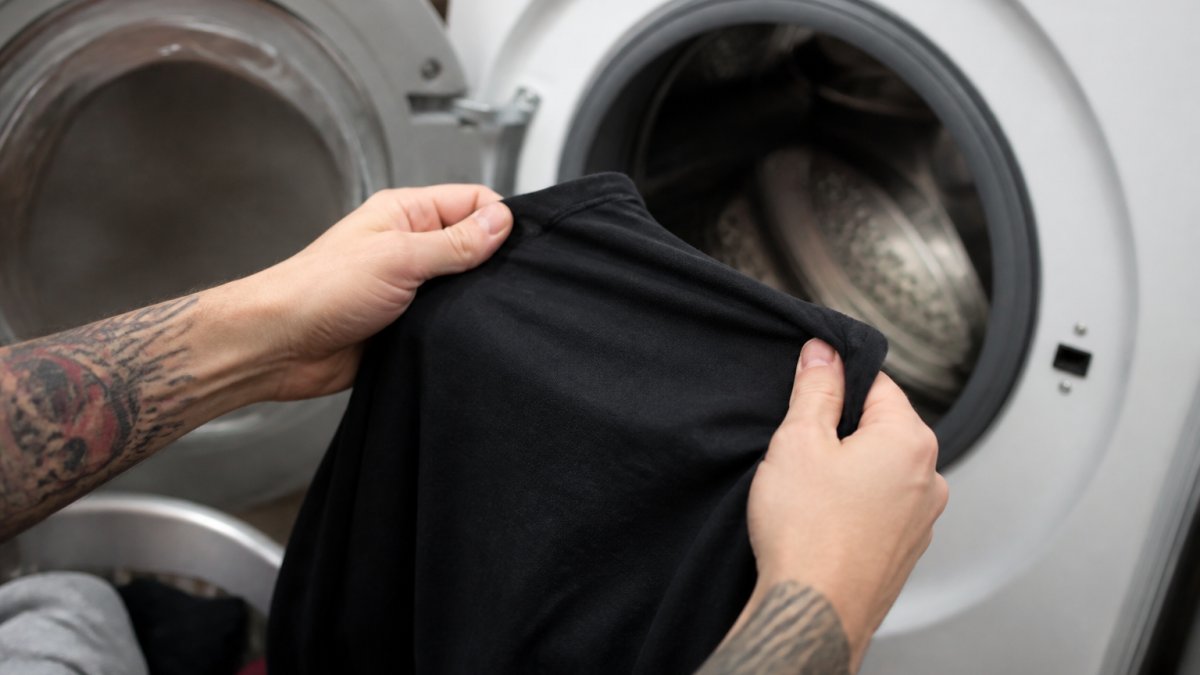
How to Wash Graphic Tees to Prevent Fading
Should You Actually Buy Print on Demand Shirts?
Here's the honest take: are print on demand shirts good quality for most use cases? Absolutely. The market is growing at roughly 25% annually, and that growth is driven by quality improvements across the industry, according to Printful's 2026 market report.
Frequently Asked Questions
Do print-on-demand shirts fade after washing?
Not if they're made right. High-quality print-on-demand shirts with proper underbasing and curing can last dozens of washes. The problem usually isn't the printing method, it's cheap blanks or rushed production. Wash inside out in cold water and tumble dry low. Graphic tees from providers using ring-spun cotton and mid-weight fabrics hold color better than thin, low-quality blanks. Sample testing before ordering in bulk is your best defense.
What's the difference between DTF and screen printing quality?
DTF (direct-to-film) and screen printing produce different results. Screen printing creates sharper lines and better durability on heavy, plain-colored garments. DTF excels at detailed, multi-color designs and works on any fabric color. For durability, screen printing has a slight edge on basic designs, but modern DTF with proper curing rivals it. The real difference: screen printing is cost-effective at scale; DTF is better for print-on-demand because it handles small runs without setup fees. Both last if executed properly.
How can you tell if a graphic tee is made with cheap materials?
Feel the fabric weight. Cheap shirts are usually 4 oz or lighter, they feel thin and flimsy. Good print-on-demand blanks run 4.3-6.1 oz, which feels substantial and holds shape. Check the tag: look for ring-spun cotton (softer, stronger) versus regular cotton. Heather blends should clearly list polyester content. Inspect the seams, cheap shirts have single-needle stitching; better ones have double-needle on sleeves and hems. Side-seaming (not just side-print) is another sign of quality construction. Finally, order a sample before committing to bulk orders.
Is print-on-demand worth it in 2026?
Yes, but only if you care about design and quality. The global print-on-demand market is projected to hit $118.85 billion by 2035, growing at 25% annually, that's not hype, that's money flowing toward proven quality. Customers are willing to pay a premium for unique, high-quality designs with a personal or limited-edition feel. Print-on-demand eliminates waste, lets you test designs before scaling, and works great for niche audiences (like horror and gaming fans). The catch: you need original artwork and a brand people actually want to wear. Generic designs? Skip it.