
Table of Contents
- Stoney T-Shirts vs Pixel Retro: The Quick Comparison
- Design Aesthetic and Art Style
- Fabric Material and Quality
- Fit, Sizing, and Color Variations
- Printing Techniques and Durability
- Pricing and Value: What You Actually Pay For
- Veteran Owned Clothing Brands for Gamers: Why It Matters
- Best Gaming Apparel Brands and Where Grave Humor Fits
- Frequently Asked Questions
Last Updated: September 23, 2026
Stoney T-Shirts vs Pixel Retro: The Quick Comparison
The global t-shirt market reached $221.4 billion in 2025, and retro pixel art designs are now flagged as a key trend for 2026 summer apparel, according to Shein's 2026 summer product listings. That surge matters if you're weighing Stoney T-Shirts vs Pixel Retro, because the two labels sit at opposite ends of the nostalgia economy.
Design Aesthetic and Art Style
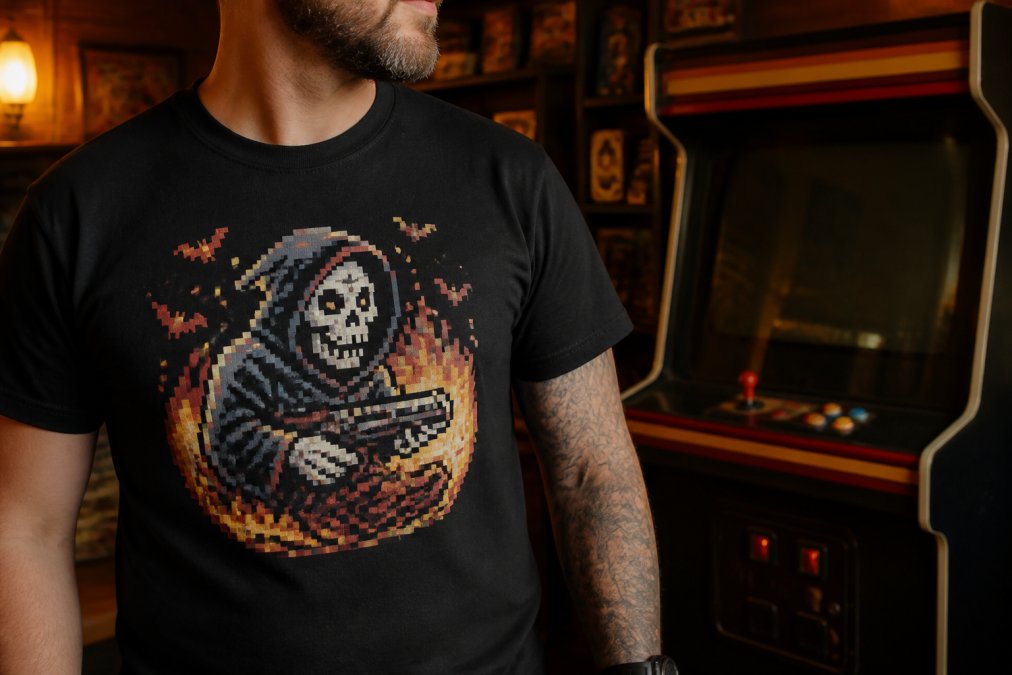
Stoney T-Shirts leans on a defined identity, while Pixel Retro spans 8-bit and 16-bit sprites, arcade graphics, and nostalgic tech motifs like cassette tapes and CRT monitors.
Fabric Material and Quality
Fabric is where these paths diverge fastest. Pixel Retro listings range from thin budget blanks to heavyweight cotton depending on the seller; Stoney T-Shirts holds a more consistent spec.
Look for these markers on any retro graphic tee:
- Heavyweight cotton (5.5 oz and up) for structure that survives washing
- Ribbed knit collar that keeps its shape instead of stretching out
- Side seams for a straighter, less boxy drape
- Taped shoulders to stop seam twisting
- Pre-shrunk fabric so your size stays your size
- Breathable fabric for everyday casual wear
Fit, Sizing, and Color Variations
Sizing is the top source of returns in graphic tees. A single-label brand usually publishes one fit guide; a multi-seller aesthetic means checking every listing's size chart, and those charts are often measured differently.
Unisex vs. gender-specific cuts: what the labels actually mean
Most retro graphic tees ship in unisex fit, which is industry shorthand for a men's cut. Compared to a women's cut, a unisex tee typically runs:
- 2-4 inches wider across the chest at the same labeled size
- 1-2 inches longer in the body
- Straighter through the waist with less taper
- Wider in the shoulder with a drop-shoulder seam placement on some blanks
How to measure so you only buy once
Skip the S/M/L guessing game. Lay a tee you already like flat and measure:
- Chest: armpit seam to armpit seam, straight across, doubled for circumference
- Body length: from the highest point of the shoulder (HPS) straight down to the hem
- Sleeve length: from the shoulder seam to the sleeve opening (for short sleeves, this is usually 7-9 inches)
- Shoulder width: seam to seam across the top of the back
Color variations and how they change the print
The color of the shirt changes how the print reads, not just how the shirt looks:
- Dark shirts (black, navy, charcoal): screen printing requires a white underbase layer, which adds thickness and can make the print feel stiffer. DTG on dark shirts often looks slightly muted because the ink has to fight the fabric color.
- Light shirts (white, natural, heather gray): colors pop with less ink, so both methods feel softer. White shirts show yellowing over time from sweat and deodorant, so they age faster than dark ones.
- Garment-dyed and vintage-washed finishes: these are pre-faded in the dye process, so the shirt looks broken-in from day one. The trade-off is that the fabric is softer but slightly less durable, and the color can continue to fade with each wash.
- Heather blends: a cotton-poly mix takes DTG ink differently than 100% cotton and can look slightly speckled. For crisp pixel art, 100% cotton is the safer choice.
Styling retro pixel tees for modern streetwear
Most results in this category are product pages that never tell you how to wear the shirt. Here's the styling angle they miss:
- The classic drape: size up one on a unisex tee, half-tuck the front into straight-leg denim or cargo pants, and let the hem break over the waistband. This is the look most retro gaming tees are photographed in.
- The layered fit: wear a fitted pixel tee under an open flannel, denim jacket, or bomber. The graphic becomes a focal point at the chest rather than the whole outfit.
- The monochrome build: pair a black pixel tee with black jeans and a single color accent (shoes, cap, or bag) in a color pulled from the design itself. This is the cleanest way to wear a busy arcade graphic without looking costume-y.
- The vintage wash play: garment-dyed and vintage-washed tees read more like thrift finds than new merch. Pair them with worn-in denim and canvas sneakers for a deliberately faded look.
- What to avoid: matching the shirt's colors head-to-toe. A pixel art tee already carries a lot of visual information; let it be the loudest thing in the outfit.
| Factor | Stoney T-Shirts | Pixel Retro |
|---|---|---|
| Brand type | Single label | Design aesthetic |
| Fit consistency | One fit guide | Varies by seller |
| Common cut | Brand-specific | Unisex fit |
| Color range | Curated palette | Vivid to garment-dyed |
| Sizing risk | Lower | Higher |
| Styling flexibility | Tied to brand look | Broad, depends on seller |
Printing Techniques and Durability
Print method decides whether your design survives 50 washes or cracks at three, the most under-covered topic in the retro pixel tee space. Here's how the two main methods age.
How each method bonds ink to fabric
- Screen printing (plastisol ink): A mesh screen is burned with your design, ink is pushed through, and the shirt is dried at roughly 320°F. The ink sits on top of the cotton as a flexible plastic film, thick, opaque, and color-fast, which is why bold 8-bit blocks look punchy.
- DTG (Direct-to-Garment): An inkjet printer lays water-based ink onto a pre-treated shirt, then heat-cures it. The ink bonds into the cotton fibers, so DTG handles gradients and fine pixel detail better, but the hand feel is softer.
- Cheap heat transfer / vinyl: A printed sheet is pressed on with adhesive. Common on sub-$20 marketplace listings, it peels in sheets after a handful of dryer cycles.
Screen print vs. DTG for pixel art: the durability comparison
No top-ranking result compares these two head-to-head for pixel designs, so here's the practical breakdown:
| Factor | Screen Print | DTG |
|---|---|---|
| Ink thickness | Thick film on top of fabric | Thin, bonded into fibers |
| Color vibrancy on dark shirts | Excellent (needs underbase) | Good, but can look muted |
| Fine pixel detail / gradients | Limited, each color needs its own screen | Excellent, full-color, no screen limit |
| Hand feel | Heavier, slightly rubbery on large prints | Soft, almost like the shirt itself |
| Wash longevity on cotton | 50+ washes with cold wash and air dry | 30-50 washes before noticeable fading |
| Failure mode | Cracks along the ink film if stretched or overheated | Fades gradually rather than cracking |
| Cost driver | Number of colors (each = one screen) | Print size and shirt color |
What actually kills a print
Heat and abrasion, in that order. Returned graphic tees usually fail from dryer heat, not wash cycles, tumbling rubs the print against other garments, wearing down DTG ink and cracking screen-printed films.
- Wash inside out in cold water (under 86°F)
- Skip the dryer entirely, or use the lowest heat setting
- Never iron directly on the print, if you must press it, use a cloth barrier and low heat
- Avoid fabric softener, which leaves a residue that dulls DTG ink
- Turn the shirt inside out before storing if it hangs against other clothes
Pricing and Value: What You Actually Pay For
Price tells you less than you'd think. A $15 pixel tee and a $35 one can use the same blank, with the difference often marketing, not materials.
Veteran Owned Clothing Brands for Gamers: Why It Matters
Veteran owned clothing brands for gamers matter because they combine two things mass retail rarely offers: original design work and a production model the owner answers for.
Best Gaming Apparel Brands and Where Grave Humor Fits
The best gaming apparel brands share three traits: original artwork, durable printing, and a fit people want to wear. Grave Humor hits all three and is our top pick for dark humor and gaming culture without the mass-market look.
- Does the brand show its actual print method and fabric spec?
- Are the designs original, or recycled clip art?
- Is there a real fit guide with measurements?
- Does the seller stand behind the product if it arrives wrong?
- Is production domestic and printed to order?
Frequently Asked Questions
What defines the 'Stoney' aesthetic in graphic apparel?
The 'Stoney' aesthetic in graphic apparel typically refers to designs inspired by a specific brand, featuring edgy, music-themed graphics with a vintage or distressed look. It often includes bold typography, album art references, and a gritty, rock-and-roll vibe. This style appeals to fans of the brand and those who enjoy alternative fashion.
How does pixel art design influence modern gaming t-shirt trends?
Pixel art design draws from 8-bit and 16-bit video game graphics, evoking nostalgia for classic gaming eras. This style resonates with fans who appreciate retro gaming culture. Pixel art tees often incorporate arcade motifs, high scores, and classic game characters, making them a staple in gaming apparel and streetwear.
Are Stoney T-shirts and pixel retro tees suitable for casual wear?
Yes, both Stoney T-shirts and pixel retro tees are designed for casual wear. Stoney T-shirts often feature band merchandise with a rock-inspired look, suitable for concerts or everyday wear. Pixel retro tees, with their vibrant 8-bit graphics, pair well with jeans, shorts, or layered under jackets for a streetwear vibe. They are typically made from breathable fabrics like heavyweight cotton, ensuring comfort. For a standout look, style them with neutral bottoms to let the graphic pop, or go full retro with accessories like chunky sneakers.
What should I look for in high-quality gaming-inspired t-shirts?
When choosing gaming-inspired t-shirts, prioritize fabric quality, printing technique, and fit. Look for high-quality fabrics for durability and a soft-touch feel. Check for print designs that resist cracking and peeling after multiple washes. Features like a ribbed knit collar, side seams, and taped shoulders can indicate better construction. Unisex fits offer versatility, but check the brand's fit guide. Brands like Grave Humor use print-on-demand to ensure fresh, vibrant designs with reduced waste, and they offer original artwork that stands out from mass-market options.