
Table of Contents
- What Small Batch Clothing Actually Means
- How Small Batch Production Cuts Textile Waste and Overproduction
- Is Print on Demand Clothing Worth It for Your Wardrobe?
- Sustainable Fashion Practices You Can Actually Verify
- Why Buy Independent Clothing Brands Instead of Mass Retail
- Quality, Craftsmanship, and the Real Cost Per Wear
- Frequently Asked Questions
Last Updated: September 18, 2026
What Small Batch Clothing Actually Means
The secondhand apparel market grew 13% in 2026, nearly four times faster than the broader retail clothing market's 3.6% growth, according to the ThredUp 2026 Resale Report. That number tells you something important: buyers are rethinking how their clothes get made, not just where they get resold. Small batch clothing is apparel produced in limited production runs rather than mass quantities, typically made to order or in small quantities that sell through before the next run begins. At Grave Humor, we build our graphic tees this way, printing each order on demand instead of warehousing thousands of units. The result is less waste, fresher designs, and shirts that don't sit in a landfill before anyone wears them.
How Small Batch Production Cuts Textile Waste and Overproduction
Overproduction is the fashion industry's dirtiest open secret. Mass retailers order inventory based on forecasts, and when those forecasts miss, unsold garments get discounted, dumped, or destroyed. Small batch production flips that model by making only what's actually wanted. According to Business of Fashion's State of Fashion 2026 Report, 59% of global consumers say they're likely to shop for resale items in 2026, a signal that mindful consumption is moving mainstream.
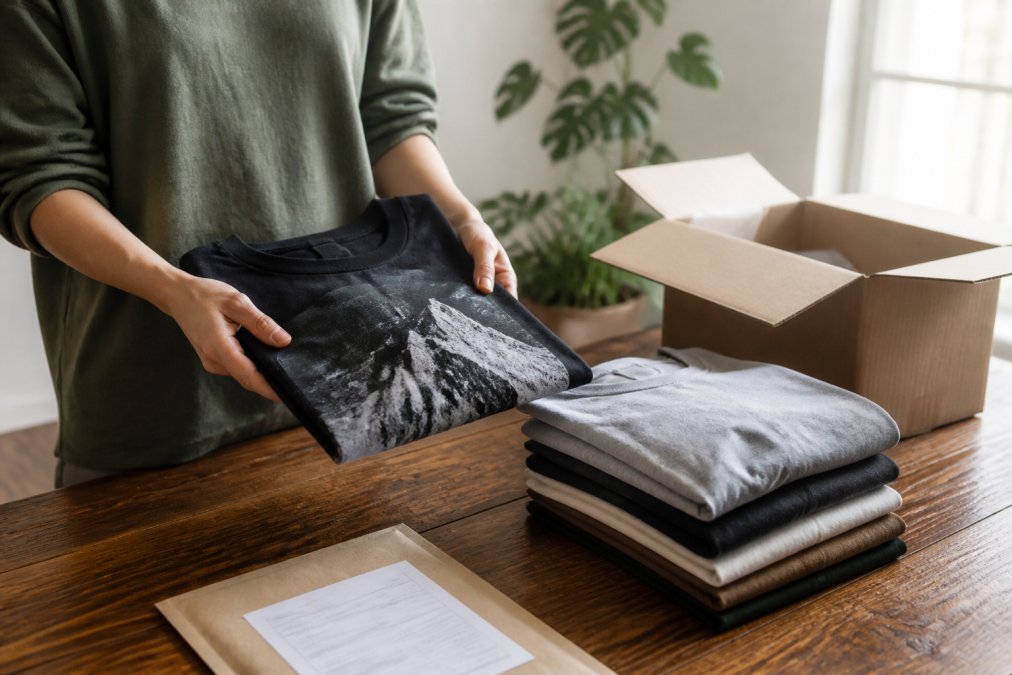
Print-on-demand takes this further. Nothing gets printed until someone orders it, which means zero deadstock and no overproduction guessing games. The tradeoff is real: per-unit costs run higher without bulk pricing, a point ScienceDirect's slow fashion profitability research confirms. But brands offset that by skipping warehouse costs and markdown losses entirely.
Is Print on Demand Clothing Worth It for Your Wardrobe?
Print-on-demand clothing is worth it if you want original designs without the waste that comes with mass production. The catch is quality variance: not every POD shop uses the same blanks or print methods. Look for durable DTG (direct-to-garment) printing, which bonds ink into the fabric instead of sitting on top of it. Our Grave Originals line, like the Lone Wolf Graphic T-Shirt at $19.99, uses soft Gildan 3000 cotton and a durable DTG print.

Here's the honest tradeoff:
| Factor | Print-on-Demand | Mass Retail |
|---|---|---|
| Production trigger | Made after you order | Made before you order |
| Waste risk | Near zero | High overproduction risk |
| Design uniqueness | Original, limited | Widely duplicated |
| Per-unit cost | Higher | Lower |
| Turnaround | 2-5 days production | Same-day shelf |
Sustainable Fashion Practices You Can Actually Verify
Sustainable fashion practices are production and sourcing methods that reduce environmental harm across a garment's lifecycle, and the only ones worth trusting are the ones you can independently confirm. One in four consumers globally buys secondhand goods specifically to reduce environmental impact, per Euromonitor research via Barclays Insights. That motivation is real, but so is greenwashing, and the gap between a brand's marketing and its actual supply chain is where most shoppers get burned.
The problem is structural. A brand can print "eco-friendly" on a hangtag without disclosing a single supplier, and there is no federal rule in the United States that forces it to. The Federal Trade Commission's Green Guides set standards for environmental marketing claims, and the agency has repeatedly warned brands against broad, unqualified terms like "sustainable" or "green" that imply a product is environmentally beneficial as a whole. Treat that as your baseline: if a claim is broad enough to mean everything, it usually means nothing.
A Greenwashing Red-Flag Checklist
Run any small batch brand through these markers before you trust the label:
- Vague umbrella terms. "Eco-friendly," "planet-positive," "conscious," and "earth-first" are red flags unless the brand immediately defines what they mean in measurable terms.
- No named suppliers or mills.
- Certifications without a certificate number. OEKO-TEX, GOTS, and bluesign are real, third-party programs, but a logo alone proves nothing. Ask for the certificate number and the issuing body, then verify it on the certifier's own site.
- No care or end-of-life guidance. A brand that genuinely cares about a garment's footprint will tell you how to wash it.
- Sustainability claims that only appear at checkout. If the environmental messaging lives on the product page but nowhere in the brand's operations, it's decoration.
What Authentic Transparency Actually Looks Like
Real small batch transparency is boring and specific. It sounds like: "This tee is printed on a Gildan 3000 blank, DTG-printed in our facility, ships in 2-5 business days, and here's how to wash it so it lasts." It names the blank, the print method, the turnaround, and the care instructions, all things you can check against the product you receive.
A useful test is the traceability chain: fiber source → mill → cut-and-sew → printer or finisher → you. A small batch brand doesn't have to disclose every link, but it should be able to answer questions about at least two of them without deflecting.
Grave Originals- Lone Wolf Graphic →
Why Buy Independent Clothing Brands Instead of Mass Retail
Independent clothing brands offer designs you won't see on five other people at the same event, and they tend to be more transparent about how things get made. But the case for buying independent goes well beyond novelty, it touches labor, economics, and the actual experience of owning the garment.
Ethical Labor and Fair Wages
Mass retail runs on volume, and volume runs on the cheapest possible labor. Independent labels typically produce in smaller runs, which makes it far easier to pay fair wages and maintain safe working conditions.
Flexibility, Testing, and the Design Freedom That Follows
Independent labels run smaller minimum order quantities (MOQs), which lets them test new fabrics and silhouettes without committing to thousands of units. That flexibility shows up in the designs themselves. A mass retailer can't justify a niche horror or gaming graphic that only appeals to a few thousand buyers. An independent shop can. Grave Humor, for example, is veteran owned and prints original artwork to order, which means a design like the Skull & Bones Cross Graphic T-Shirt at $25.99 exists because someone wanted it, not because a focus group approved it.

The Consumer Benefits of Mindful Consumption
Buying independent isn't just an ethical gesture, it changes what you actually own. You get:
- Designs with a point of view. Original artwork instead of licensed clip art recycled across a dozen storefronts.
- A shorter, more accountable supply chain. Fewer intermediaries means fewer places for quality to slip.
- Direct communication with the maker. Independent brands answer emails. Mass retailers route you to a chatbot.
- Garments built to be kept, not replaced. Small batch economics reward durability, because a brand that only makes 200 units can't afford a reputation for shirts that fall apart.
How to Tell an Independent Brand From a Dropshipper
Not every small-looking shop is actually small batch. A few markers separate the real thing from a storefront reselling the same overseas catalog as everyone else:
- The brand names its blanks, print method, or production facility.
- Turnaround times are realistic (2-5 days for made-to-order, not "ships in 24 hours" from a warehouse it doesn't own).
- Product photos are consistent and original, not stock images used across multiple sites.
- The brand has a point of view, a niche, a story, a reason to exist beyond a logo.
Quality, Craftsmanship, and the Real Cost Per Wear
Cost per wear, not sticker price, is the honest way to judge whether small batch clothing is worth the extra spend. A $26 tee worn twice a week for two years costs about 25 cents per wear. A $10 shirt that fades or cracks after three washes costs more per wear, because you replace it faster. Gymshark's shift toward small-batch manufacturing improved both sustainability and production efficiency, per FashionCapital's coverage, showing that quality control and reduced waste can coexist.
Frequently Asked Questions
Is small batch clothing higher quality than mass-produced items?
Often, yes. Small batch runs get more attention at each stage, from fabric selection to print checks, because there are fewer units to inspect. On-demand printing also means your item is printed close to when it ships rather than sitting in a warehouse. That said, quality still depends on the blanks and printing method a brand chooses. A durable DTG print on a soft cotton tee, washed cold and inside out, can offer good longevity.
How does small batch production reduce clothing waste?
Traditional manufacturing guesses demand months ahead and often overproduces. Unsold stock becomes deadstock, gets discounted, or ends up destroyed. Small batch and print-on-demand models produce closer to actual demand, so fewer unsold garments are created. The secondhand apparel market grew 13% in 2026, nearly four times faster than the broader retail clothing market, which shows how much excess inventory the old model generates.
What is the difference between small batch and print-on-demand clothing?
Small batch means a brand produces a limited run of a design, often a few dozen to a few hundred units, then decides whether to restock. Print-on-demand takes that further: nothing is printed until someone orders it. Both reduce inventory risk. Print-on-demand removes it almost entirely, which is why many independent brands use it to test new artwork without committing to a full production run.
Is print on demand clothing worth it compared to buying from a big retailer?
It depends on what you value. Print-on-demand usually costs more per shirt than a mass-market tee, but you get original artwork, domestic printing, and no warehouse waste. A $25.99 triblend tee printed to order supports an independent artist and typically outlasts a discounted big-box shirt. If cost per wear matters more than sticker price, print on demand clothing is often worth it.