
Table of Contents
- Why Do Graphic Tees Crack? The Real Culprits
- How to Wash Graphic Tees: Step-by-Step Method
- Drying Methods That Prevent Graphic Tee Cracking
- Identify Your Print Type Before You Clean
- How to Fix Peeling Screen Print Before It Spreads
- Why a $35 Tee Beats Disposable Fashion
- Final Wash-Day Checklist
- Frequently Asked Questions
Last Updated: September 8, 2026
Nothing kills a favorite shirt faster than watching the design crack into a spiderweb of faded lines after a few washes. Learning how to prevent graphic tees from cracking comes down to understanding that the washing machine, not the shirt itself, is usually the culprit. We print original horror and gaming designs to order, so we have a real stake in helping you keep that artwork looking sharp.
The core principle is simple: heat, friction, and harsh chemicals are the enemies of ink adhesion. A 2026 analysis of over 340 Reddit discussions on apparel longevity found that high-quality construction significantly reduces the likelihood of print cracking and peeling compared to disposable fashion Sasshole T-Shirts analysis of consumer discussions on garment longevity. Below, we'll show you exactly how to wash, dry, and care for your graphic tees so the design outlasts the trend cycle.
Why Do Graphic Tees Crack? The Real Culprits
Graphic tee cracking happens when the ink layer on your shirt loses its flexibility and can no longer bend with the fabric underneath. The print is essentially a thin film of polymer bonded to the cotton fibers; when that film becomes brittle or the bond weakens, you get those familiar cracks and flakes.
Three main forces drive this degradation:
- Mechanical friction: The constant rubbing of fabric against fabric, zippers, or denim during a wash cycle stresses the print.
- Heat damage: Hot water and high-heat drying soften the ink, then cool it into a more brittle state, accelerating wear.
- Chemical breakdown: Bleach and aggressive detergents attack the binding agents that keep ink adhered to the fabric.
A 2026 industry overview on garment maintenance confirms that avoiding heavy items like denim or metal zippers in the same load as graphic tees is essential to prevent the friction that accelerates ink cracking Yiume guide on why graphic prints crack. Understanding these culprits matters because each prevention step below targets one of them directly.
How to Wash Graphic Tees: Step-by-Step Method
The most effective way to prevent graphic tee cracking is to follow a consistent, gentle washing routine that minimizes stress on the print. This method takes about five extra minutes of prep but can double the lifespan of your artwork.
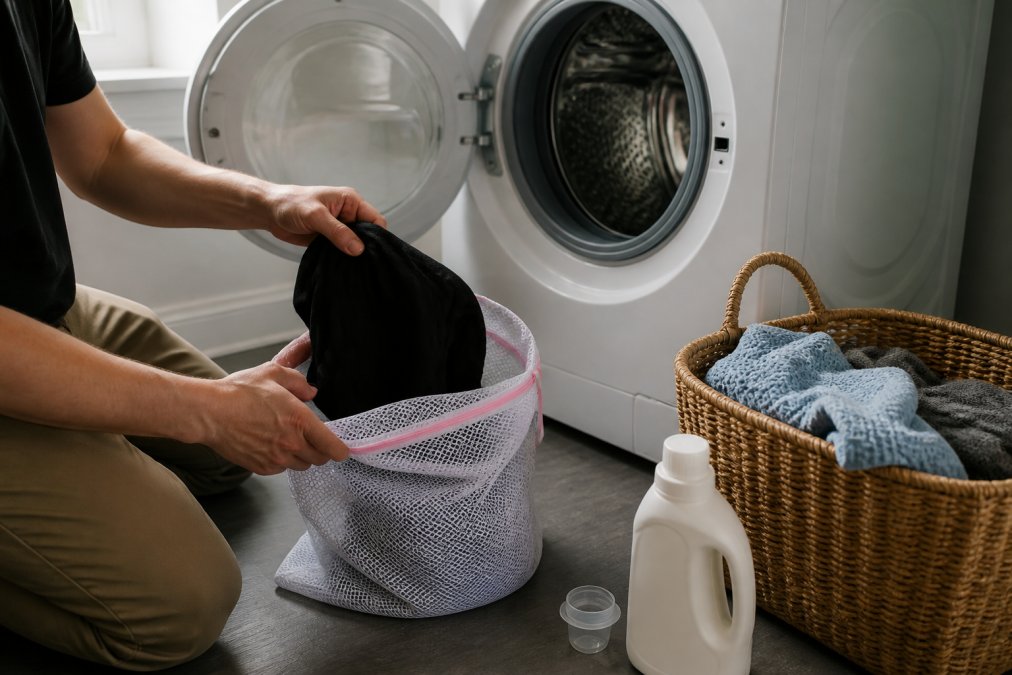
Step 1: Turn Your Shirt Inside Out
Turning the shirt inside out protects the print from direct friction against other garments and the drum wall. The exposed cotton takes the abrasion while the ink stays shielded.
Step 2: Sort by Weight and Color
Heavy items like jeans, hoodies with metal zippers, and anything with rivets should never share a load with your graphic tees. The 2026 Yiume guidance is explicit that mechanical friction from heavy items accelerates ink cracking, so keep tees with lightweight cottons and similar fabrics Yiume FAQ on print deterioration and laundry sorting. Sorting by color also prevents dye transfer that can dull your design.
Step 3: Choose Cold Water and the Right Cycle
Cold water is non-negotiable for print longevity. The delicate or gentle cycle uses slower agitation and a shorter wash time, which means less mechanical stress on the ink.
Step 4: Select Detergent Wisely
Use a standard liquid detergent at the recommended dosage, and never add bleach or fabric softener to loads containing graphic tees. Fabric softeners coat the fibers and can interfere with ink adhesion over time. One 2026 source notes that adding liquid fabric softeners will not restore ink that has already cracked, so prevention through proper detergent choice is the only real defense Yiume guidance on fabric softener limits.
Drying Methods That Prevent Graphic Tee Cracking
Air drying is the single best way to prevent graphic tee cracking because it eliminates the heat damage that tumble drying inflicts on prints. The heat from a dryer softens the ink film, and the tumbling action bends the fabric while the ink is in this vulnerable state.
Air Dry vs. Tumble Dry: What Changes
| Method | Heat Exposure | Friction Risk | Print Lifespan Impact |
|---|---|---|---|
| Air dry flat or on a line | None | Minimal | Best for preserving ink |
| Tumble dry low, inside out | Moderate | Moderate | Acceptable in a pinch |
| Tumble dry high | High | High | Accelerates cracking and peeling |
If you must use a dryer, choose the lowest heat setting, keep the shirt inside out, and remove it while still slightly damp. The residual moisture means the print never fully bakes into a brittle state.
Identify Your Print Type Before You Clean
Different printing methods require slightly different care, and knowing what you own helps you tailor your routine. Graphic tees generally fall into three categories: screen print, direct-to-garment (DTG), and vinyl transfer.
Screen Print, DTG, and Vinyl Transfer Differences
Screen printing lays down a thick layer of ink on top of the fabric. It is the most durable option but also the most prone to cracking when the ink layer dries out, because the thick film has less flexibility.
Direct-to-garment (DTG) printing embeds ink into the fibers rather than laying it on top. This creates a softer feel and better flexibility, making DTG prints generally more resistant to cracking, though they can fade faster with repeated washing.
Vinyl transfers are heat-pressed plastic films that sit on the fabric surface. They are the most vulnerable to heat damage and can peel at the edges if exposed to high dryer temperatures.
How to Fix Peeling Screen Print Before It Spreads
Most prevention guides stop at the wash cycle, but the reality is that cracks and peeling will eventually happen, especially on well-worn favorites. Knowing how to intervene at the first sign of damage can add months or even years to a shirt's life.
Screen Print: The Heat-Seal Rescue
Screen-printed ink sits on top of the fabric in a thick film, which is why it's the most prone to cracking and edge lifting. When you catch peeling early, you can often re-adhere the lifted edges before they break off entirely.
- Do not pull loose flakes. Pulling tears the ink away from the cotton fibers and removes a chunk of the design permanently. Instead, use fine-tipped tweezers to gently press the flake back down into place.
- Apply a heat-activated adhesive. Place a sheet of parchment paper over the print and run a warm iron (set to medium, no steam) over the area for 10-15 seconds. The heat softens the remaining ink and can re-bond edges that have lifted but not detached. Do not use high heat, as this will melt the design into a brittle state.
- Use a fabric glue for stubborn edges. For edges that refuse to lay flat, apply a tiny amount of fabric glue (like Aleene's No-Sew) with a toothpick underneath the lifted edge, press down, and let it dry flat for 24 hours. This is a temporary fix that works best on small areas.
DTG Prints: The Fade-Proofing Strategy
Direct-to-garment prints are embedded in the fibers, so they rarely peel in large sheets. Instead, they fade or develop fine hairline cracks across the surface. You cannot re-ink a DTG print at home, but you can slow further degradation.
- Apply a fabric protector. A spray-on fabric protector (like Scotchgard) creates a thin barrier that repels water and reduces friction on the print surface. Reapply every few washes to maintain the barrier.
- Switch to a gentle, cold hand wash. Once a DTG print shows wear, machine washing, even inside out, accelerates the breakdown. Hand washing in cold water with a mild detergent (like Woolite) is the only way to preserve what's left of the design.
Vinyl Transfers: The Edge-Seal Fix
Vinyl prints are plastic films that peel at the edges when the adhesive fails. This is the easiest print type to repair at home.
- Re-press the edges. Place a silicone baking sheet or parchment paper over the print and press with a heat press or a household iron set to medium-high (no steam) for 15 seconds. The heat reactivates the adhesive. Do not slide the iron; press straight down to avoid shifting the vinyl.
- Seal the edges with clear nail polish. For edges that keep lifting after a re-press, apply a thin layer of clear nail polish along the edge of the vinyl. This acts as a sealant and prevents moisture from getting underneath the film.
When to Give Up: The 50% Rule
A common pattern among apparel repair specialists is that if more than 50% of the print is cracked, peeling, or flaking, no home repair will restore it. The best move is to repurpose the shirt as a sleep shirt or gym rag, or to cut it into a custom patch for a jacket or bag.
Why a $35 Tee Beats Disposable Fashion
The price difference between a premium graphic tee and a fast-fashion alternative is not just about branding, it's about the physical properties of the fabric and the print. Understanding how cotton vs. polyester blends react to heat and friction, and how your local water quality affects the wash cycle, explains why a $35 shirt can outlast a $10 shirt by years.
Fabric Composition: Cotton vs. Polyester Blends
The base fabric determines how the print adheres and how it survives washing. Most graphic tees fall into two categories:
- 100% cotton: Cotton fibers are natural, absorbent, and breathable. Screen-printed ink bonds well to cotton because the fibers create a rough surface for the ink to grip. However, cotton is highly reactive to heat, hot water causes the fibers to swell and contract, which stresses the ink film. Cotton also shrinks in the dryer, which pulls the print in different directions and causes cracking.
- Cotton-polyester blends (typically 50/50 or 60/40): Polyester fibers are synthetic, smooth, and heat-resistant. The blend adds durability and reduces shrinkage, which means less stress on the print during washing and drying. The trade-off is that polyester does not absorb ink as well as cotton, so prints on blends can have a slightly different texture and may be more prone to fading over time.
A common pattern in garment testing is that a 100% cotton tee with a screen print will crack faster than a 50/50 blend under identical wash conditions, purely because the cotton shrinks and moves more.
Water Hardness: The Overlooked Variable
Most care guides ignore the water itself, but mineral content in your tap water plays a significant role in print degradation. Hard water contains high levels of calcium and magnesium, which do not rinse cleanly from fabric. These minerals build up on cotton fibers over time, creating a rough, abrasive surface that wears down the ink film with every wash.
- If you have hard water: The mineral buildup acts like fine sandpaper on the print. Using a water softener in your washing machine, or adding a half-cup of white vinegar to the rinse cycle, helps neutralize mineral deposits before they bond to the fabric. Vinegar is safe for prints and does not leave a residue.
- If you have soft water: Your tap water is already low in minerals, which means less abrasive buildup. However, soft water can cause detergents to foam more, so use the recommended dosage to avoid excess soap residue that can dull the print.
You can check your local water hardness through your municipal water report or with a simple test strip from a hardware store.
The Real Cost-Per-Wear Math
A $35 tee that lasts through 100 washes costs $0.35 per wear. A $10 tee that loses its design after 15 washes costs $0.67 per wear, and that does not include the environmental cost of manufacturing and shipping a replacement.
At Grave Humor, our print-on-demand model means each shirt is produced only when ordered, which supports quality control and reduces waste. The price point reflects the fabric quality and print method that make the shirt worth repairing rather than replacing.
Final Wash-Day Checklist
Before you toss your next graphic tee in the laundry, run through this quick checklist to keep the print intact:
- Turn the shirt inside out
- Secure it in a mesh laundry bag
- Sort with lightweight, similar-colored items only
- Select cold water and the delicate cycle
- Use standard liquid detergent, no bleach or softener
- Air dry, or tumble dry on low and remove while damp
- Never iron directly over the print
Frequently Asked Questions
Does heat cause graphic tees to crack?
Yes, heat is one of the main causes of graphic tee cracking. High temperatures in a tumble dryer break down the polymer bonds in the ink, making the print brittle. Hot water in the wash cycle has a similar effect on both the ink and the fabric fibers. Wash in cold water and skip the dryer entirely. Air drying at room temperature keeps the print flexible and prevents the heat damage that leads to cracking and peeling.
Should I wash graphic tees inside out?
Yes, always wash graphic tees inside out. Turning the shirt reverses the print so it faces the inside of the drum. This protects the design from direct friction against other clothes and the washing machine wall. Mechanical friction and agitation are primary causes of ink cracking. Combining the inside-out method with a mesh laundry bag adds another layer of protection for the print surface.
How to fix a cracked graphic tee?
For minor cracking, place a sheet of parchment paper over the design and press with a warm iron on the reverse side for 10-15 seconds. This can re-adhere small lifted edges. For peeling screen print, use a small amount of textile-safe adhesive applied with a toothpick under the lifted edge, then press flat. Note that fabric softener will not restore cracked ink. Severe cracking that has flaked off cannot be fully repaired.
Can acetone be used to fix cracked graphic tees?
No, do not use acetone on cracked graphic tees. Acetone dissolves the ink and will strip the design completely from the fabric. It also damages the cotton fibers, leaving a faded or discolored patch. Acetone is a solvent for removing prints entirely, not for repairing them. For fixing cracks, use heat pressing with parchment paper or textile adhesive. If the print is beyond repair, consider it a design opportunity for a DIY project.
Keeping your graphic tees looking sharp requires a bit of discipline on wash day, but the payoff is a wardrobe that holds its personality. At Grave Humor, we design original horror, gaming, and fantasy apparel with quality in mind, printed to order in the USA with fast shipping and secure checkout. When you care for your shirts properly, our artwork stays as bold as the day it arrived. Explore our catalog and find a design worth protecting.